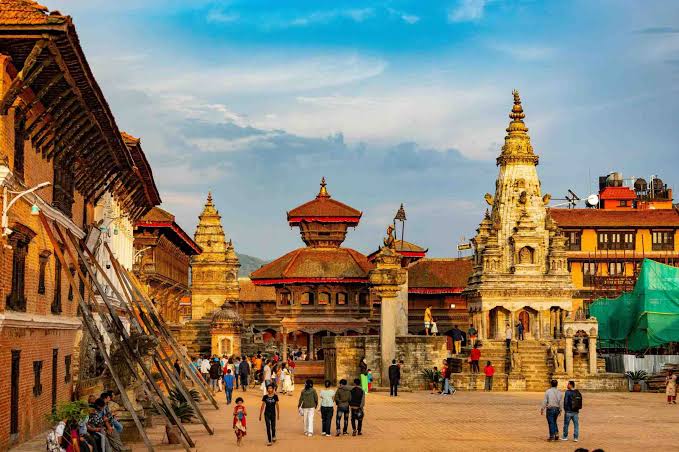
This Bhaktapur travel guide covers everything you need to plan your visit — the temples and squares worth your time, entry fees and tickets, the food you shouldn't leave without tasting, festival dates, day trips to Nagarkot and Changu Narayan, and honest advice on where to stay. Bhaktapur is the best-preserved of the Kathmandu Valley's three ancient royal cities, a UNESCO World Heritage Site where daily life still happens between 600-year-old temples: potters spinning clay in open squares, grandmothers drying grain on brick pavements, and the smell of juju dhau — the "king of yogurts" — drifting from clay pots. Many travelers give it half a day. This guide will show you why it deserves at least one night.
Kathmandu is chaotic, Patan is compact — Bhaktapur is complete. Of the three Durbar Squares in the Kathmandu Valley, Bhaktapur's medieval city fabric survives most intact: no vehicles in the old town core, brick lanes that haven't changed course in centuries, and a living Newari culture that isn't performed for tourists because it isn't for tourists at all. The city was the capital of the Kathmandu Valley during the Malla golden age until the 15th century, and the kings who ruled it competed to out-build their cousins in Kathmandu and Patan. The result is a concentration of woodcarving, pagoda architecture, and stone sculpture that earned the entire city — not just one monument — its UNESCO World Heritage listing.
Bhaktapur is also the gateway to the valley rim. It sits on the road to Nagarkot, Nepal's most famous sunrise viewpoint, and below Changu Narayan, the oldest temple in Nepal. Travelers who stay overnight in Bhaktapur get the city's magic hours — dawn and dusk, when the day-trippers are gone — plus the easiest access in the valley to both.
There are more places to visit in Bhaktapur than one visit comfortably allows, but these are the ones that define the city.
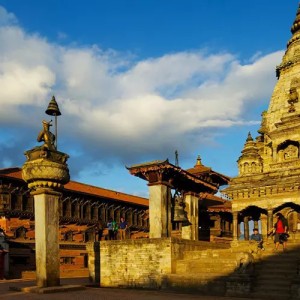
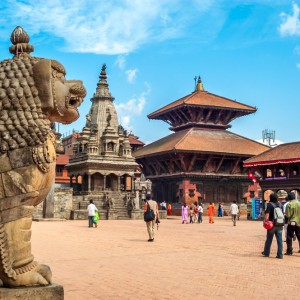
The royal heart of the old city. The 55-Window Palace, with its extraordinary carved wooden façade, was the seat of the Malla kings; beside it stands the Golden Gate (Sun Dhoka), often called the most beautiful piece of metalwork in Nepal, a gilded torana of deities that took master craftsmen years to complete. The square also holds the Vatsala Temple, the Big Bell, and the famous statue of King Bhupatindra Malla praying atop a stone pillar, facing his palace for three centuries.
A two-minute walk from Durbar Square, Taumadhi is dominated by Nyatapola, the tallest pagoda temple in Nepal — five tiers rising over 30 meters, built in 1702 and strong enough to have survived the major earthquakes of both 1934 and 2015. The stairway is guarded by pairs of stone figures — wrestlers, elephants, lions, griffins, and goddesses — each pair said to be ten times stronger than the one below. Climb the plinth at sunset; it's the best free viewpoint in the city.
The oldest quarter of Bhaktapur. The Dattatreya Temple, built from the timber of a single tree according to legend, anchors a square lined with medieval maths (priest houses). In an alley behind the Pujari Math, look up for the Peacock Window — a 15th-century wooden lattice carving so fine it's nicknamed the "Mona Lisa of Nepal."
Bhaktapur's potters still work the way their ancestors did: clay thrown on hand-spun wheels, thousands of pots drying in open rows, straw-fired kilns smoking at the square's edge. Visit in the morning to watch the wheels turning, and try throwing a pot yourself — most workshops welcome visitors for a small fee.
The best thing to do in Bhaktapur costs nothing: get lost. Wander east of Dattatreya Square or into the lanes south of Taumadhi and you'll find hidden courtyards (bahals), neighborhood shrines buried in marigolds, weavers, wood-carvers, and the everyday rhythms of a city that never became a museum.
For a complete walking route with maps and timings, read our guide to Bhaktapur Durbar Square: entry fees, tickets and what to see.
Entry to the old city is ticketed for visitors, and the fee funds the ongoing restoration of the monuments — including the painstaking post-2015-earthquake rebuilding you'll see in progress. As of 2026, foreign nationals pay NPR 1,800 (about USD 13–14), while visitors from SAARC countries and China pay NPR 500. Nepali citizens enter free. Keep your ticket: it can be extended into a multi-day visitor pass free of charge at the ticket office if you show your passport — worthwhile, because Bhaktapur rewards a second day. Ticket counters sit at every main entry gate into the old town, and the pass covers the whole city core rather than individual monuments, though a few museums inside charge small separate fees.
Full details, including the visitor-pass extension process and current opening hours, are in our dedicated Bhaktapur entry fee and ticket guide.
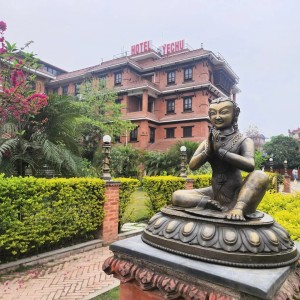
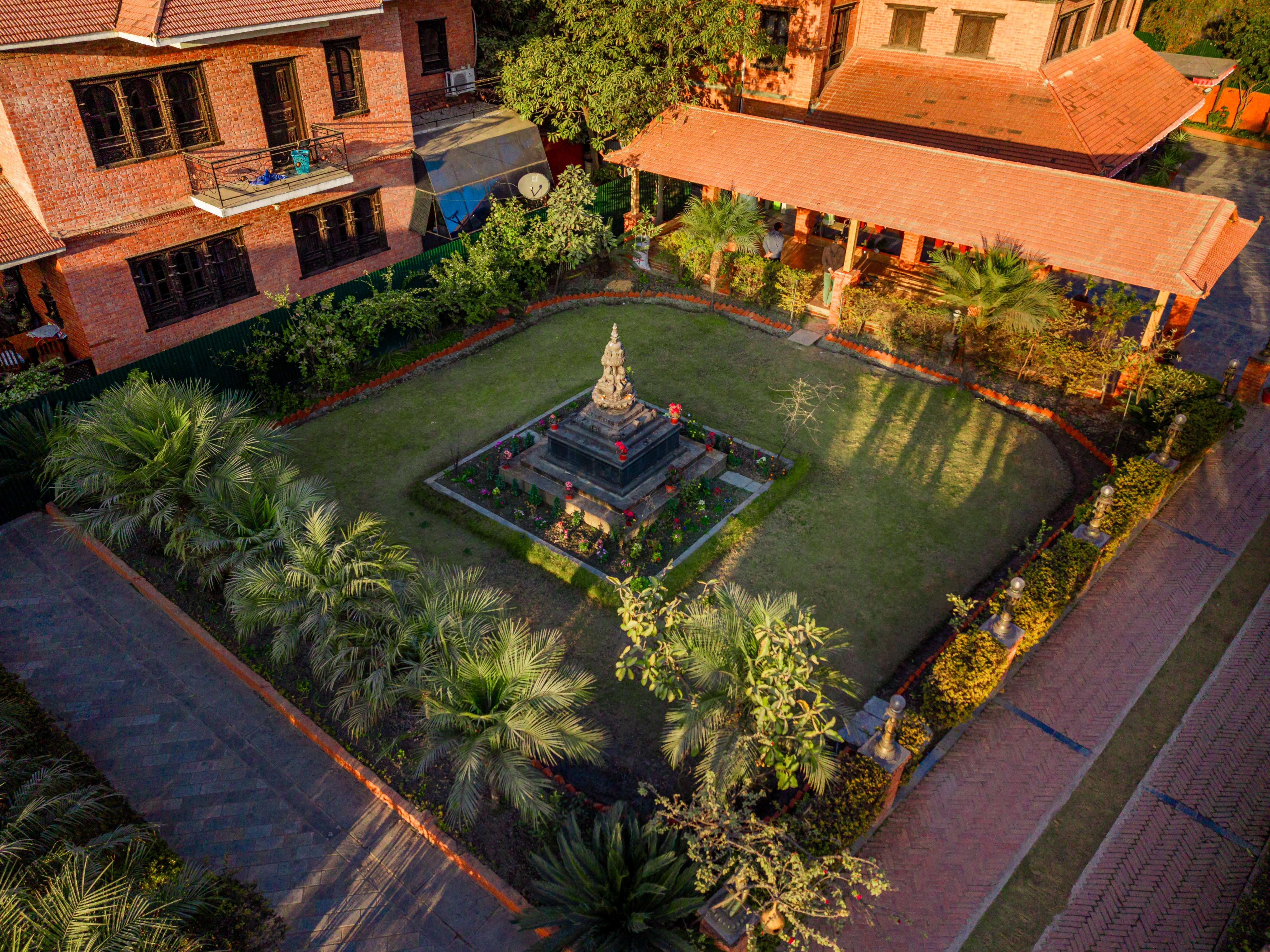
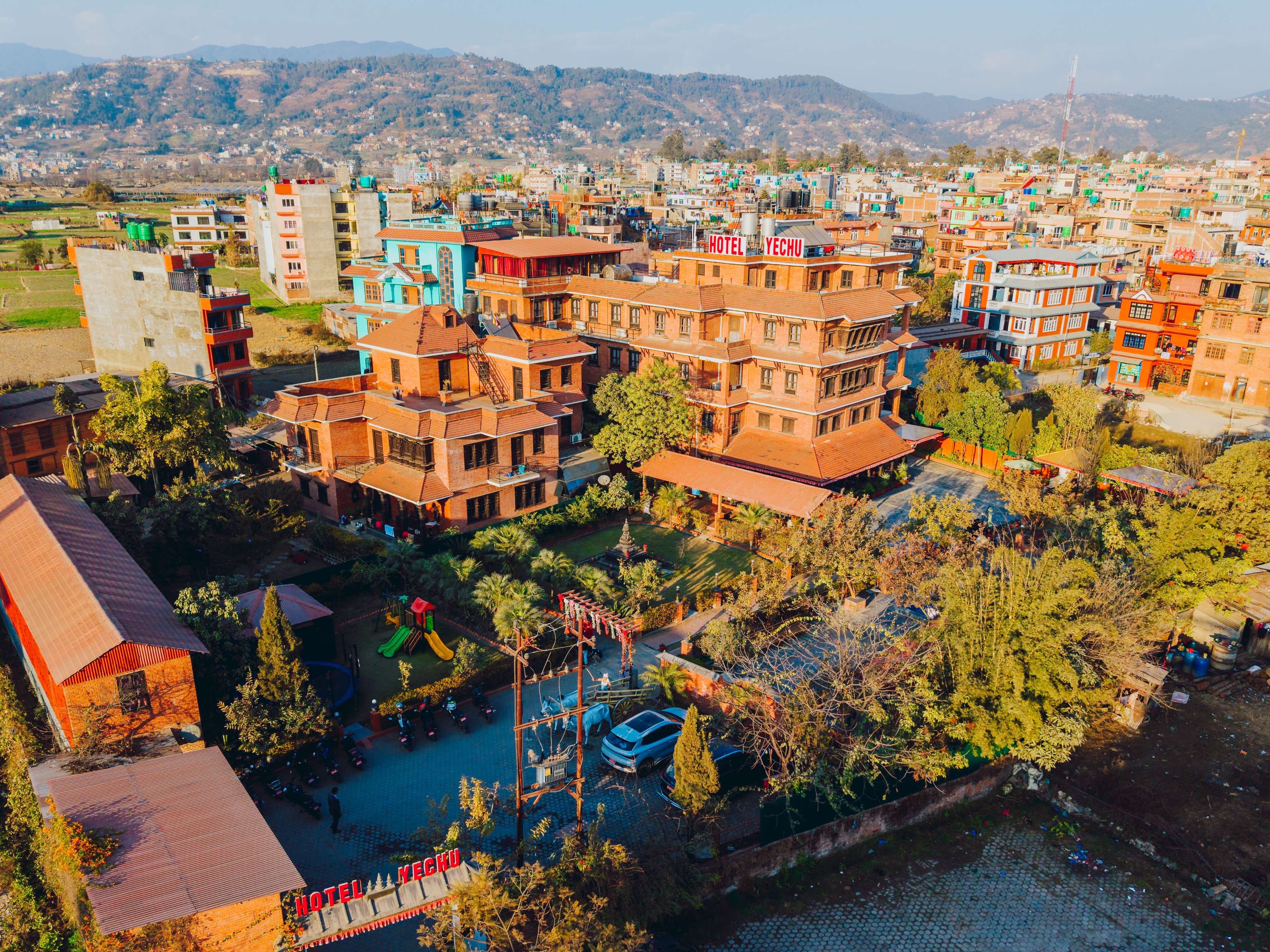
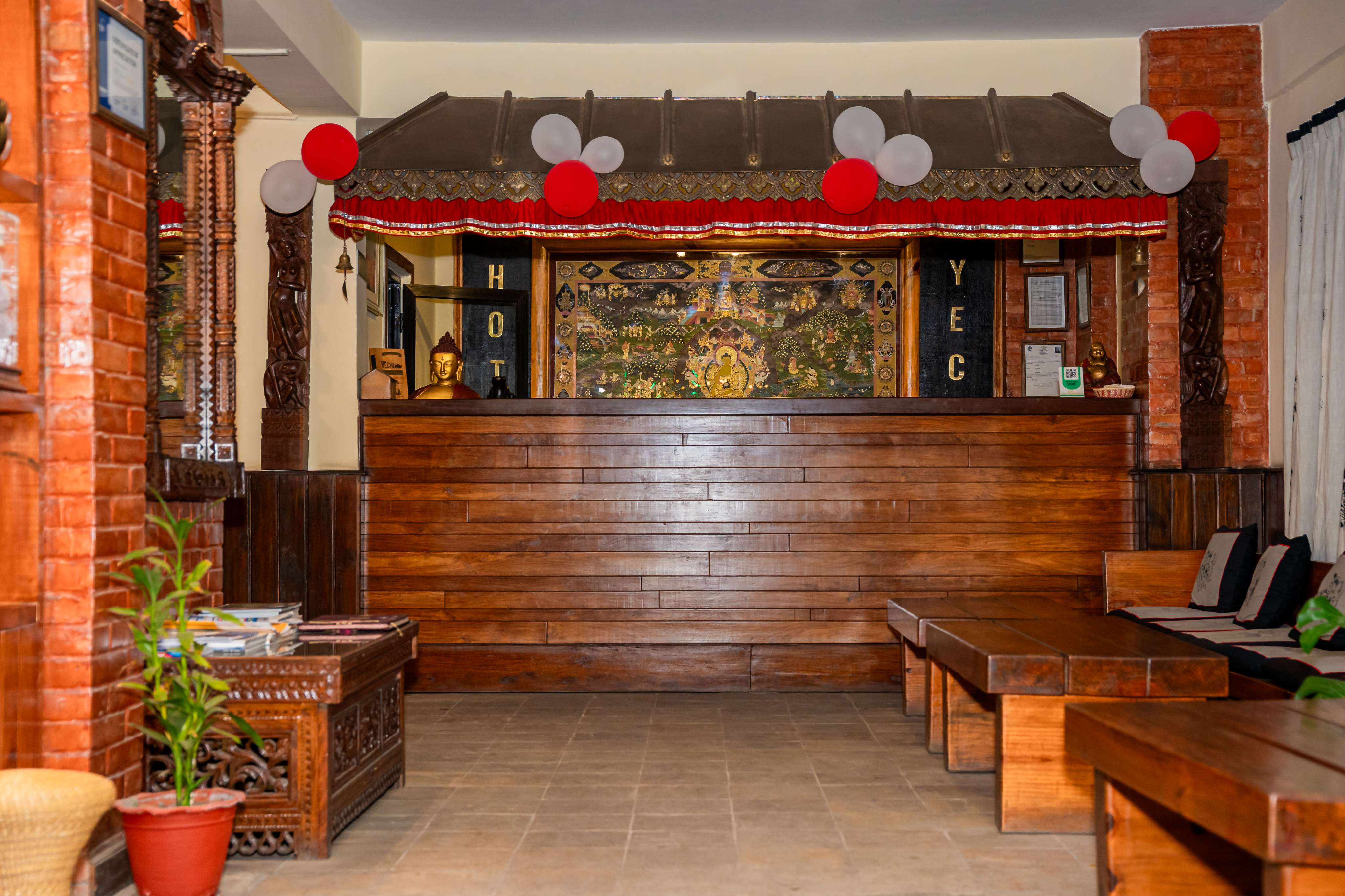
Planning to stay overnight in Bhaktapur? Hotel Yechu is a boutique heritage hotel in Kamalbinayak, ten minutes from Durbar Square, with a swimming pool, gardens, and free parking — check room availability here
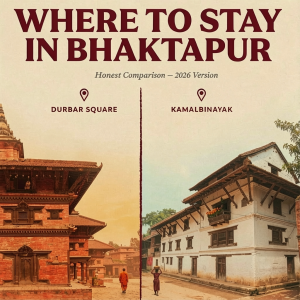
Deciding where to stay in Bhaktapur comes down to one honest choice: inside the old city, or just outside it.
Inside the old town (Durbar Square area): you're steps from the monuments and inside the atmosphere after dark. The trade-offs are real, though — rooms are in converted townhouses that are often small and stair-heavy, vehicle access is restricted so you'll carry luggage through lanes, parking is effectively impossible, and temple bells and roosters start early.
Just outside the old town (Kamalbinayak, on the Nagarkot road): ten minutes' walk from the eastern gates, this side of the city trades doorstep-proximity for space and quiet. It's the practical choice if you're traveling with a car or driver, with children, in a group, or if you simply want a pool, a garden, and a full night's sleep between sightseeing days. Staying on the Nagarkot road also puts you first out of the city for a sunrise run to Nagarkot — a genuine advantage, since sunrise waits for no one.
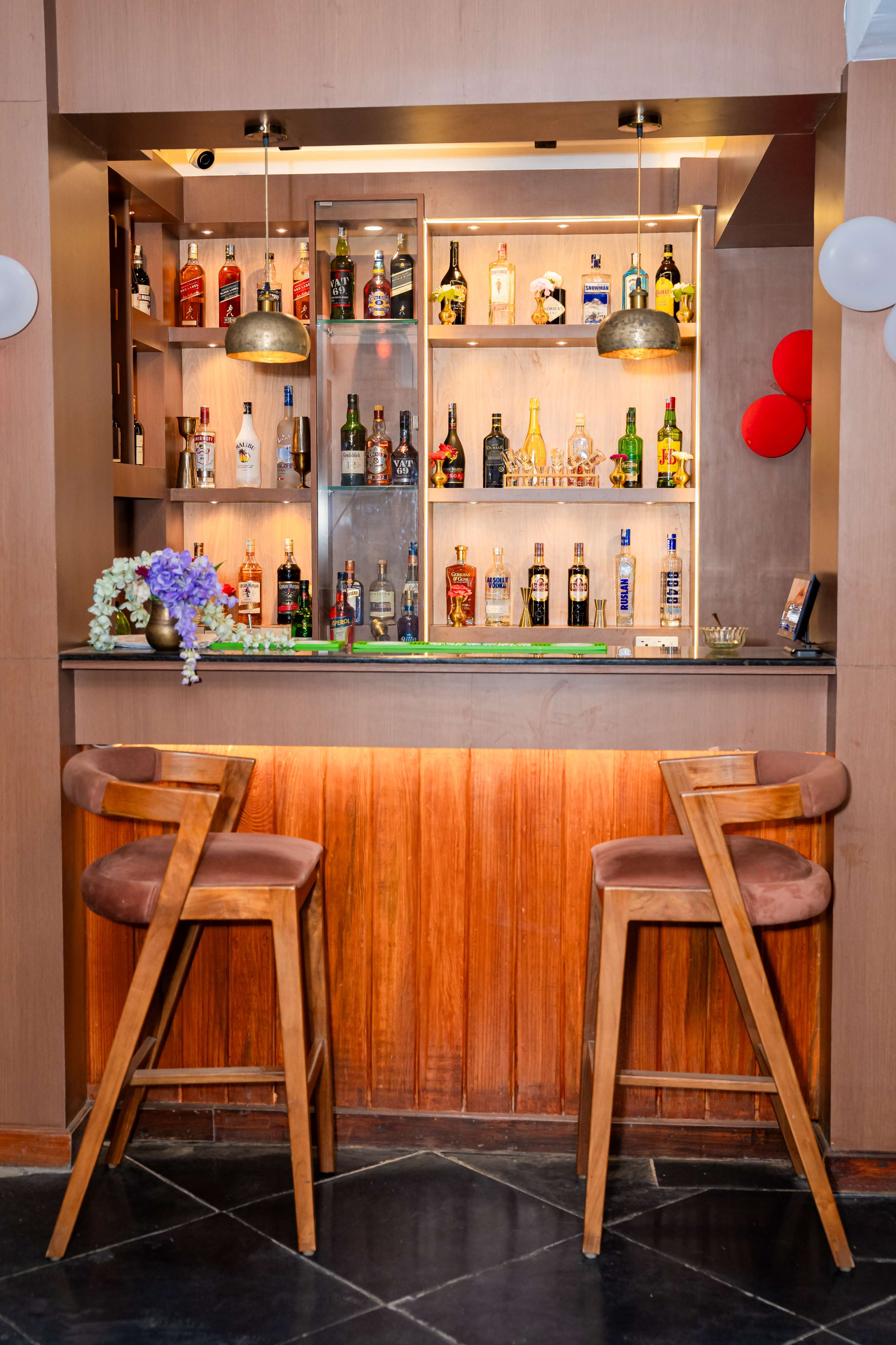
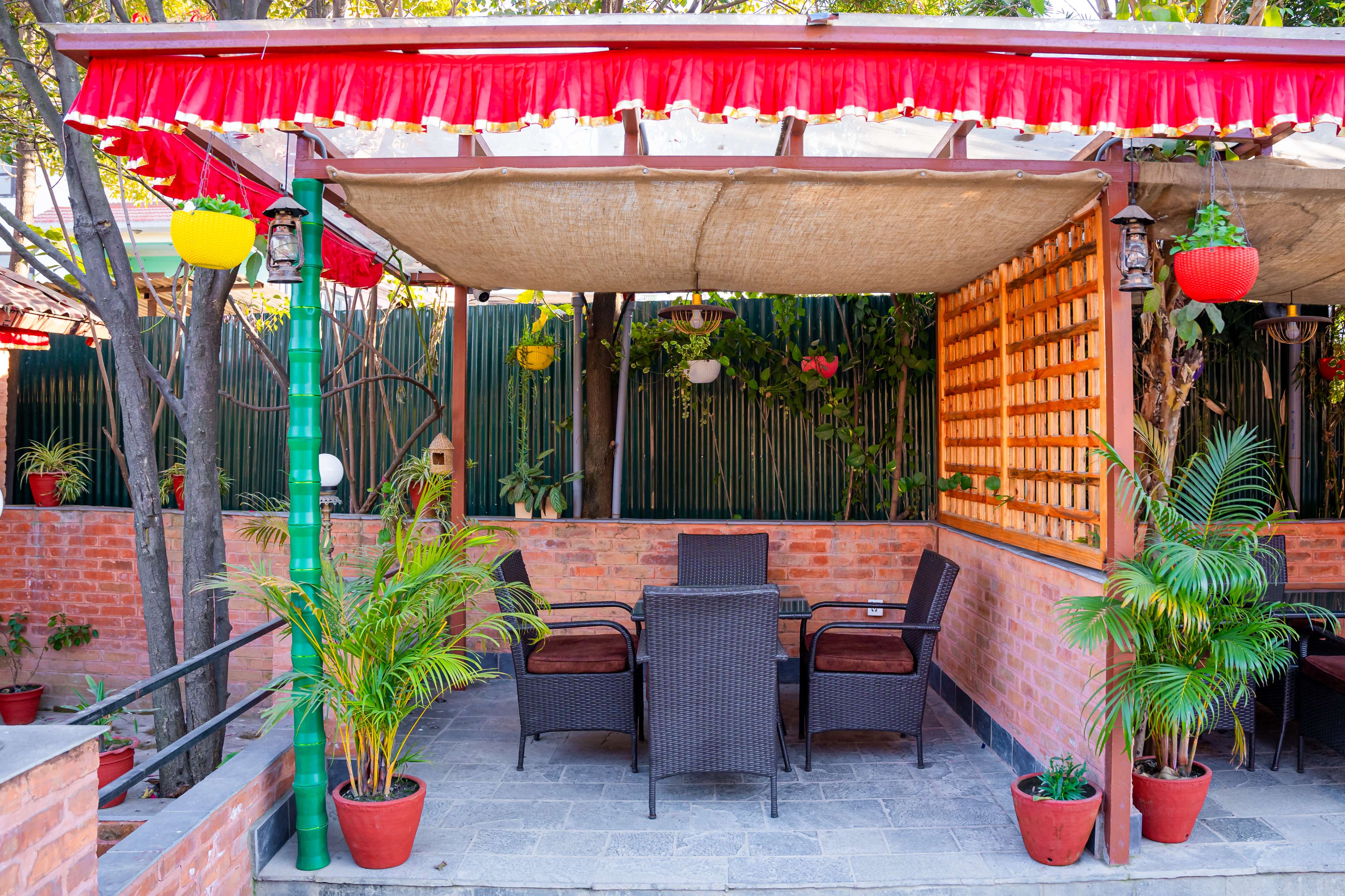
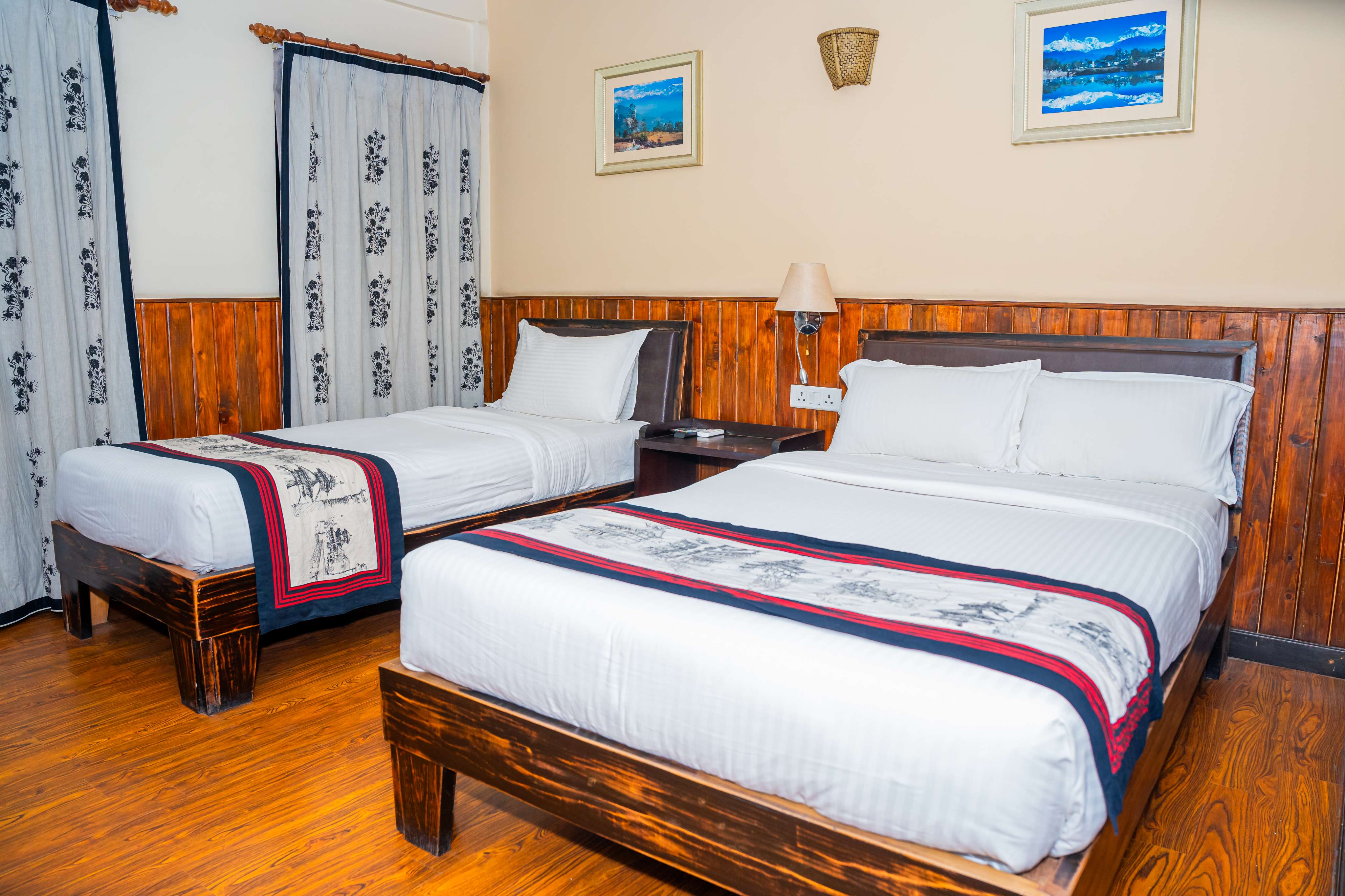
Hotel Yechu sits in this second category: 25 heritage-styled rooms with a swimming pool, garden restaurant, kids' play area, banquet halls, and free on-site parking — see rooms and rates.
For a fuller comparison of both areas, including what each is like at night and typical prices, read Where to Stay in Bhaktapur: Durbar Square vs Kamalbinayak Compared.
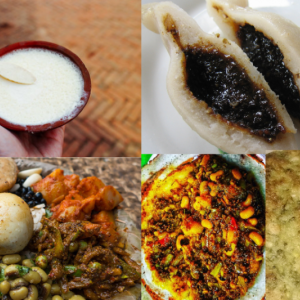
Bhaktapur is arguably the best place in Nepal to eat Newari food, and there is one non-negotiable: juju dhau, literally "king of yogurts" — buffalo-milk yogurt set in clay pots that give it a dense, custard-like texture and a faintly smoky sweetness. It's made only here, and every local has an opinion on which shop makes it best (the ones near Dattatreya Square have strong claims).
Beyond juju dhau, seek out samay baji, the classic Newari feast plate — beaten rice with spiced buffalo meat (choila), black soybeans, ginger, boiled egg, and achar; bara, savory lentil patties, sometimes topped with egg or minced meat; yomari in winter, steamed rice-flour dumplings filled with molasses and sesame, tied to the Yomari Punhi festival; and chatamari, the thin rice crêpe often called "Newari pizza." Wash any of it down with a glass of local aila (rice spirit) if you're feeling brave, or fresh lassi if you're not.
You'll find the most atmospheric eating around Taumadhi Square's rooftop restaurants and in small family-run kitchens in the back lanes. For dish-by-dish recommendations and where to find each, read our Newari food guide to Bhaktapur — or try the traditional Newari menu at Hotel Yechu's garden restaurant where our chefs prepare samay baji and seasonal Newari dishes daily.
If you can time your visit to a festival, do it — Bhaktapur celebrates harder than anywhere in the valley.
Bisket Jatra (April) is the big one: Nepali New Year in Bhaktapur means a week of chariot processions, where teams of young men haul the massive wooden chariot of Bhairab through the streets in a tug-of-war between the city's upper and lower halves, and a 25-meter ceremonial pole (yosin) is raised and toppled at Yosin Khel. It is loud, crowded, chaotic, and absolutely unforgettable — book accommodation well in advance.
Gai Jatra (August) fills the streets with processions honoring the year's departed, led by children dressed as sacred cows, and has evolved into a day of satire, costume, and comedy. Dashain and Tihar (October–November), Nepal's biggest national festivals, bring kite-flying, marigold garlands, and lamp-lit evenings. Yomari Punhi (December) celebrates the harvest with the sweet dumplings described above.
Festival dates follow the lunar calendar and shift each year — our Bhaktapur festival calendar for 2026–27 lists exact dates and viewing tips for each.
Two of the Kathmandu Valley's best excursions start practically at Bhaktapur's gates.
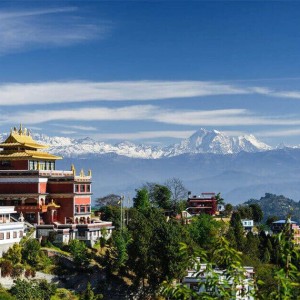
Nagarkot, at about 2,175 meters on the valley rim, is Nepal's most accessible Himalayan viewpoint: on a clear morning the panorama runs across the Langtang and Jugal ranges, and in peak visibility you can make out Everest as a distant point on the horizon. The drive from Bhaktapur takes roughly 45 minutes to an hour up a winding hill road — which means leaving around 4:30–5:00 AM in autumn. This is where staying on Bhaktapur's Nagarkot road pays off: you're already on the route while Kathmandu-based travelers are still fighting through the city. October to March offers the most reliable views. Full route options, taxi costs, and timing advice are in our Bhaktapur to Nagarkot sunrise guide.
Six kilometers north of Bhaktapur on a hilltop stands Changu Narayan, a UNESCO World Heritage Site and by most accounts the oldest temple in Nepal — its earliest stone inscription dates to 464 AD. The temple courtyard is an open-air museum of Licchavi-era stone sculpture, and the village lane leading up to it is lined with thangka painters' studios. It's an easy half-day by taxi, or a beautiful 2–3 hour hike through fields and villages from Bhaktapur's northern edge; the truly ambitious hike onward from Changu Narayan to Nagarkot itself. Our visitor's guide to Changu Narayan covers both routes.
Traveling as a group, or planning an event? Hotel Yechu's two banquet halls — named for Changu Narayan and the Nawa Durga — host weddings, seminars, and celebrations for groups large and small, with garden space and in-house catering. Enquire about events here
Bhaktapur lies about 13 kilometers east of central Kathmandu and roughly 11 kilometers from Tribhuvan International Airport — closer to the airport, in fact, than much of Kathmandu itself.
By taxi: the simplest option. From Thamel expect 30–60 minutes depending on traffic; from the airport, often just 25–40 minutes. Agree the fare before departing or insist on the meter.
By local bus: frequent, cheap, and slow — buses to Bhaktapur leave from Ratna Park/Bagbazar in Kathmandu and drop you near the old town gates. An experience in itself, best without large luggage.
From Nagarkot: taxis and local buses run down the hill road, passing directly through Kamalbinayak on Bhaktapur's eastern side.
Note that vehicles cannot enter the old town core — every hotel inside the ticketed zone means a walk with your bags, while hotels outside the gates (including Hotel Yechu, which has free on-site parking) are directly reachable by car. Step-by-step directions from the airport, Kathmandu, and Nagarkot are in our guide on how to get to Bhaktapur.
October to November is the golden window: post-monsoon skies are at their clearest for mountain views, temperatures are mild, and Dashain and Tihar fall in this period. March to April is the second-best season — warm days, rhododendrons on the valley rim, and Bisket Jatra in mid-April. December to February brings cold mornings and evenings but crisp visibility and thin crowds; hotels with good heating (and hot showers) matter in these months. June to September is monsoon: afternoon rains, lush green terraces, moody light for photographers, and the year's lowest prices — mountain views, however, are rare.
Whatever the season, plan around the day-tripper pattern: tour groups flood the squares from about 10 AM to 4 PM. Staying overnight gives you the city at 7 AM and 6 PM, when it belongs to locals and the light turns the brick city gold.
Bhaktapur is one of the most family-friendly stops in Nepal: the car-free old town means children can roam the squares safely, Pottery Square lets them get their hands muddy at a real potter's wheel, and counting the strongmen and griffins up Nyatapola's staircase beats any temple lecture. Juju dhau is universally beloved by small travelers. The practical challenges are hotel-side — old-town heritage rooms are cramped for families and rarely have outdoor space — which is why families tend to base just outside the core. Hotel Yechu was built with families in mind: a dedicated kids' play area, a swimming pool, gardens with room to run, family rooms, and parking for those traveling with a car — see our family rooms. Our full family guide to Bhaktapur with kids has a child-tested itinerary.
Half day (if you must): enter by the western gate → Durbar Square and the Golden Gate → Taumadhi Square and Nyatapola → juju dhau near Dattatreya Square → Pottery Square on the way out.
One full day: the half-day route at a slower pace, plus the Peacock Window, the back lanes east of Dattatreya, sunset from Nyatapola's plinth, and a Newari dinner on a Taumadhi rooftop.
Two days (recommended): Day one as above, staying overnight. Day two: 4:45 AM departure for Nagarkot sunrise, breakfast back at the hotel, then either the Changu Narayan half-day or a slow morning revisiting the squares before the crowds arrive.
Our detailed 1-day and 2-day Bhaktapur itineraries map each of these hour by hour.
Most Bhaktapur travel guides treat the city as a day trip from Kathmandu. Spend one night here and you'll understand why that's the single biggest mistake travelers make in the Kathmandu Valley: the city that remains after the buses leave — lamp-lit squares, evening bhajans, mist lifting off Nyatapola at dawn — is the Bhaktapur worth crossing the world for. Whenever you come and however long you stay, Bhaktapur rewards the traveler who slows down.
Ready to plan your stay? Hotel Yechu welcomes you with heritage comfort, gardens, a pool, and the quiet side of the ancient city — ten minutes from Durbar Square, first on the road to the sunrise.
How many days do you need in Bhaktapur?
One full day covers the main squares; two days lets you add a Nagarkot sunrise or Changu Narayan and see the city without crowds. Most travelers who stay overnight say the evening and early morning were the highlight.
What is the entry fee for Bhaktapur Durbar Square?
As of 2026, NPR 1,800 for foreign nationals and NPR 500 for SAARC and Chinese nationals; Nepali citizens enter free. The ticket covers the whole old city and can be extended into a multi-day pass free at the ticket office with your passport.
Is Bhaktapur worth visiting?
Yes — it is the best-preserved medieval city in the Kathmandu Valley, a UNESCO World Heritage Site, and the center of living Newari culture, food, and craft.
How far is Bhaktapur from Kathmandu?
About 13 km east of central Kathmandu (30–60 minutes by taxi) and roughly 11 km from Tribhuvan International Airport.
Can you see the Himalayas from Bhaktapur?
On clear days, yes — and Nagarkot, the valley's premier Himalayan viewpoint, is only a 45–60 minute drive up the road from Bhaktapur's eastern side.
What food is Bhaktapur famous for?
Juju dhau ("king of yogurts"), plus Newari specialties like samay baji, bara, chatamari, and — in winter — yomari.
Where should I stay in Bhaktapur?
Inside the old town for doorstep atmosphere, or just outside (Kamalbinayak, on the Nagarkot road) for quiet, space, parking, and amenities like pools and gardens — the better fit for families, drivers, and longer stays.
Is Bhaktapur open in the evening?
The old city never "closes" — the ticket checkpoint operates in daytime hours, and overnight guests experience the squares in the evening and early morning when they're at their most atmospheric.
Do I need a guide in Bhaktapur?
Not required — the city is walkable and this guide covers the essentials — but a licensed local guide (arrangeable through your hotel) adds real depth to the architecture and legends.