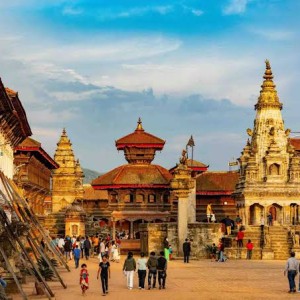
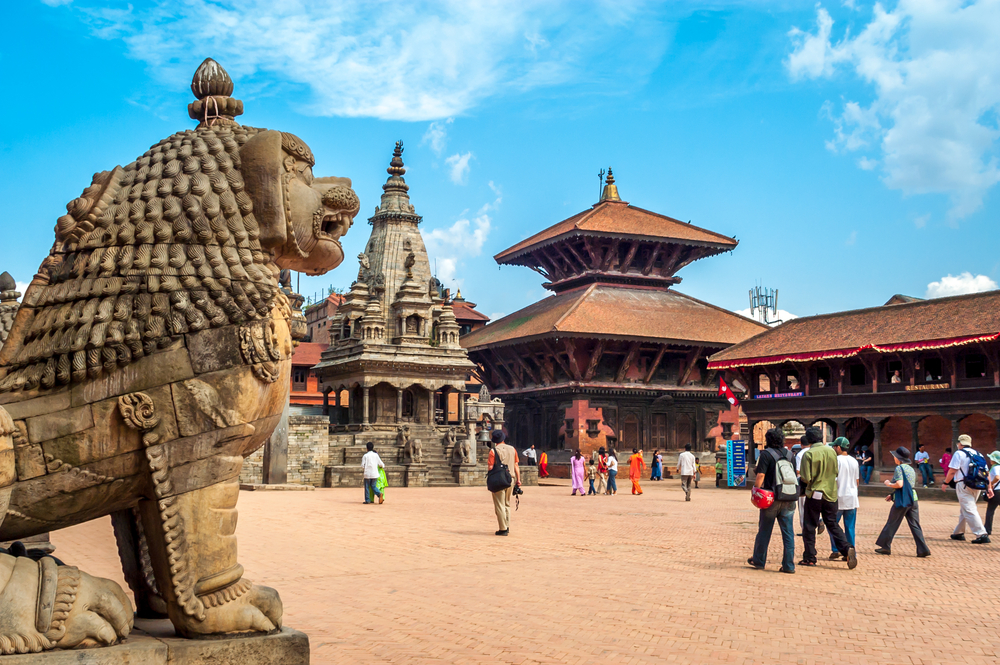
The Bhaktapur Durbar Square entry fee in 2026 is NPR 1,800 for foreign nationals, NPR 500 for visitors from SAARC countries and China, and free for Nepali citizens. That single ticket doesn't just cover the square — it covers the entire walled old city of Bhaktapur, and with one little-known trick at the ticket counter, you can extend it into a multi-day pass at no extra cost. This guide explains exactly how the tickets work, where to buy them, what your fee actually funds, and what to see once you're inside.
Here is the current fee structure at the city's entry gates:
Foreign nationals: NPR 1,800 (roughly USD 13–14 / EUR 12–13). SAARC nationals (India, Bangladesh, Sri Lanka, Pakistan, Bhutan, Maldives, Afghanistan) and Chinese nationals: NPR 500. Nepali citizens: free entry. Children under 10: generally free regardless of nationality.
Two things surprise most visitors. First, this is a city ticket, not a monument ticket — one fee covers Durbar Square, Taumadhi Square with the Nyatapola Temple, Dattatreya Square, Pottery Square, and every lane in between. Second, the fee is per entry period, not per day — which is where the extension comes in.
Note: fees are set by Bhaktapur Municipality and revised periodically. Confirm the current rate at the gate; this page is updated when rates change.
This is the most valuable paragraph in this guide. If you're staying overnight — or think you might come back within your Nepal trip — take your ticket and your passport to the ticket office at the main (western) gate and ask for a visitor pass extension. They'll note your passport number and validity dates on the ticket, converting your single entry into a pass valid for the duration of your visa — completely free. Day-trippers almost never learn this; overnight guests use one ticket for sunrise walks, evening strolls, and a second full day. If you're staying at a hotel in Bhaktapur, do this within your first hour in the city.
Ticket counters operate at every main gate into the old town — the principal ones being the western gate (nearest Durbar Square, where most taxis drop off), the Kamalbinayak gate on the northeastern side (the natural entry if you're arriving from the Nagarkot road), and the southern gates near the bus stops. Counters are typically staffed from around 7:00 AM to 7:00 PM. Payment is in Nepali rupees; cards are increasingly accepted at the main gate, but carry cash to be safe.
Important nuance: the city itself never closes. There are no walls being locked at night — the checkpoints simply stop being staffed outside counter hours. If you're staying overnight in Bhaktapur, you can walk the squares at 6 AM or 9 PM freely; your extended pass covers any daytime re-entry questions.
Your NPR 1,800 is not a tourist tax that disappears — Bhaktapur Municipality is famous in Nepal for actually spending it visibly. The revenue funds monument restoration (including the extensive post-2015-earthquake rebuilding you'll see in careful progress on several temples), heritage conservation of the brick-paved streets, waste management that keeps the old town notably cleaner than Kathmandu, and cultural preservation programs. Bhaktapur's ticket-funded restoration model is studied across South Asia, and knowing your fee rebuilds what the earthquake damaged makes it considerably easier to pay.
The former royal seat of the Malla kings, named for the extraordinary row of 55 intricately carved wooden windows along its upper storey — a masterpiece of Newari woodcarving from the reign of King Bhupatindra Malla. Part of the palace houses the National Art Museum (small separate fee, worth it for the paubha paintings and Malla-era manuscripts).
Often described as the most precious piece of art in the entire Kathmandu Valley: a gilded copper torana gateway crowded with deities — Taleju at the center — leading into the palace's inner courtyards. Percy Brown, the art historian, called it the most beautiful piece of metalwork in Asia. Look closely at the Garuda above the door; the detail rewards minutes, not seconds.
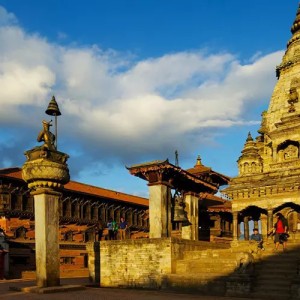
Facing his own palace from atop a stone pillar, hands folded in prayer, sits the bronze figure of Bhaktapur's greatest builder-king. He has watched over the square since 1699 — through earthquakes, restorations, and the transformation of his capital into a living museum.
The stone shikhara-style Vatsala Devi Temple, rebuilt after collapsing completely in the 2015 earthquake, stands beside the great Taleju Bell — nicknamed the "bell of barking dogs" because its deep toll reportedly sets off every dog in the neighborhood.
Your ticket continues working as you walk five minutes south to Taumadhi Square, home of the five-tiered Nyatapola — the tallest temple in Nepal, guarded by its famous staircase of stone strongmen, elephants, lions, griffins, and goddesses. Continue east to Dattatreya Square for the city's oldest quarter and the Peacock Window, then loop back through Pottery Square where the wheels still spin daily. This full circuit — all on one ticket — is what makes Bhaktapur the best-value heritage entry in Nepal despite being the priciest single fee.
Compare honestly: Kathmandu Durbar Square charges NPR 1,000 for one square; Patan charges similarly for one square. Bhaktapur charges NPR 1,800 for an entire preserved medieval city — four major squares, dozens of temples, and every lane between them, extendable to multi-day for free. Per hour of sightseeing, it is the cheapest ticket in the valley, and it's the only one whose proceeds you can visibly see at work in the restoration scaffolding and spotless streets.
Timing: enter before 9:30 AM or after 4:00 PM to experience the squares without tour-bus crowds — the golden-hour light on the brick and timber is when Bhaktapur photographs best. Dress: modest clothing is respectful around active temples; several inner shrines (including through the Golden Gate courtyards) restrict photography or non-Hindu entry — signs are posted, follow them. Guides: licensed local guides wait near the western gate and typically charge NPR 1,500–2,500 for a 2–3 hour walk; worthwhile for the legends behind the architecture. Keep your ticket on you — checkpoints occasionally ask to re-see it as you move between squares.
Everything in this guide points to one conclusion: Bhaktapur's ticket is engineered to reward the overnight visitor. Extend the pass, see the squares at dawn before the buses arrive, spend midday at the pool or on a Nagarkot sunrise run, and return to the squares for the lamp-lit evening — all on the same NPR 1,800 a day-tripper spends on four rushed hours.
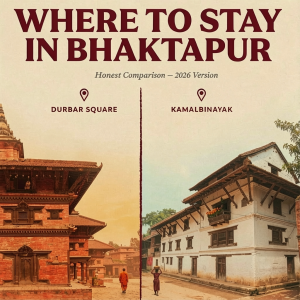
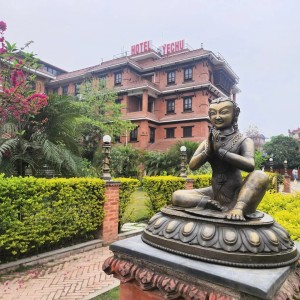
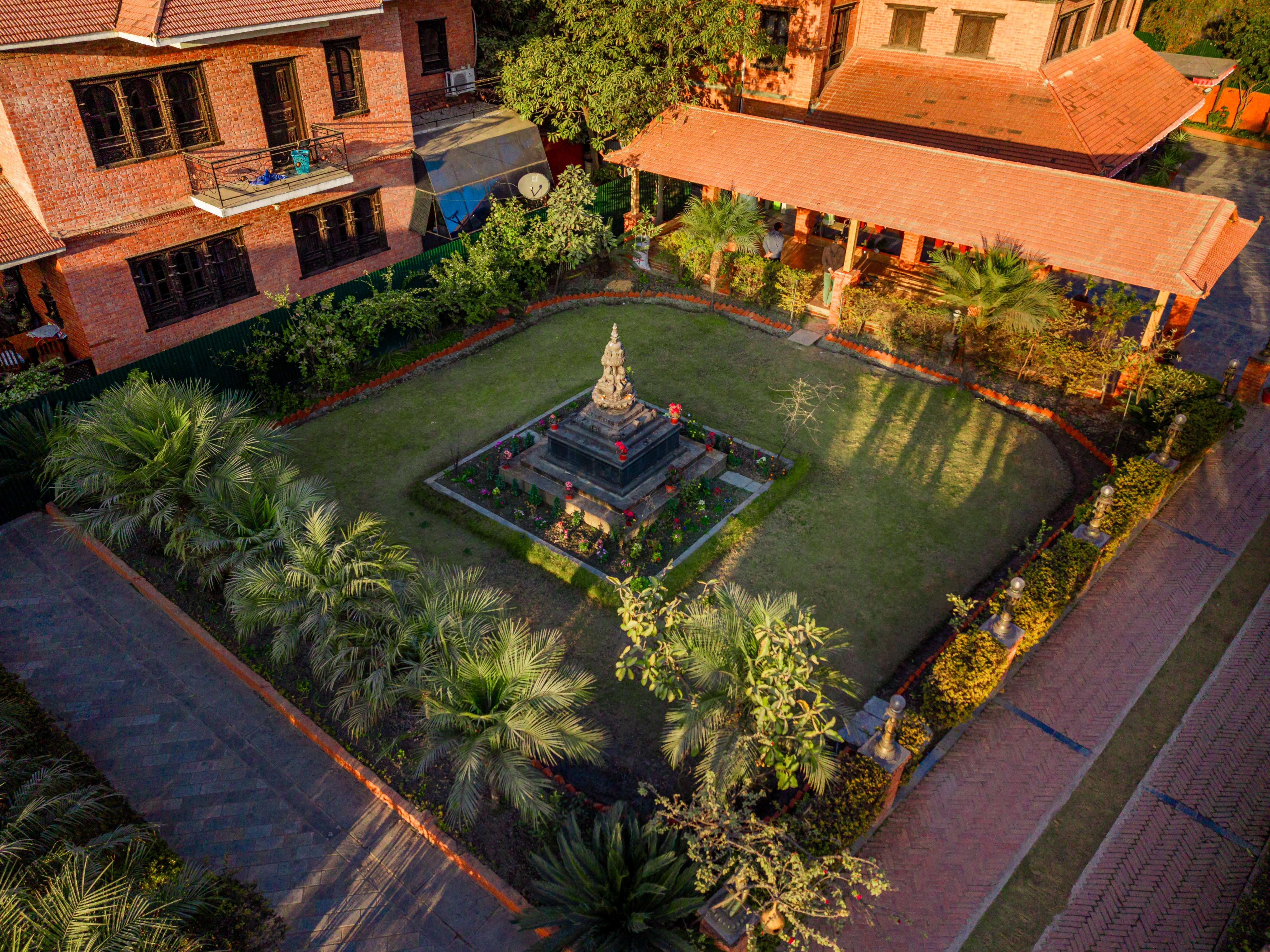
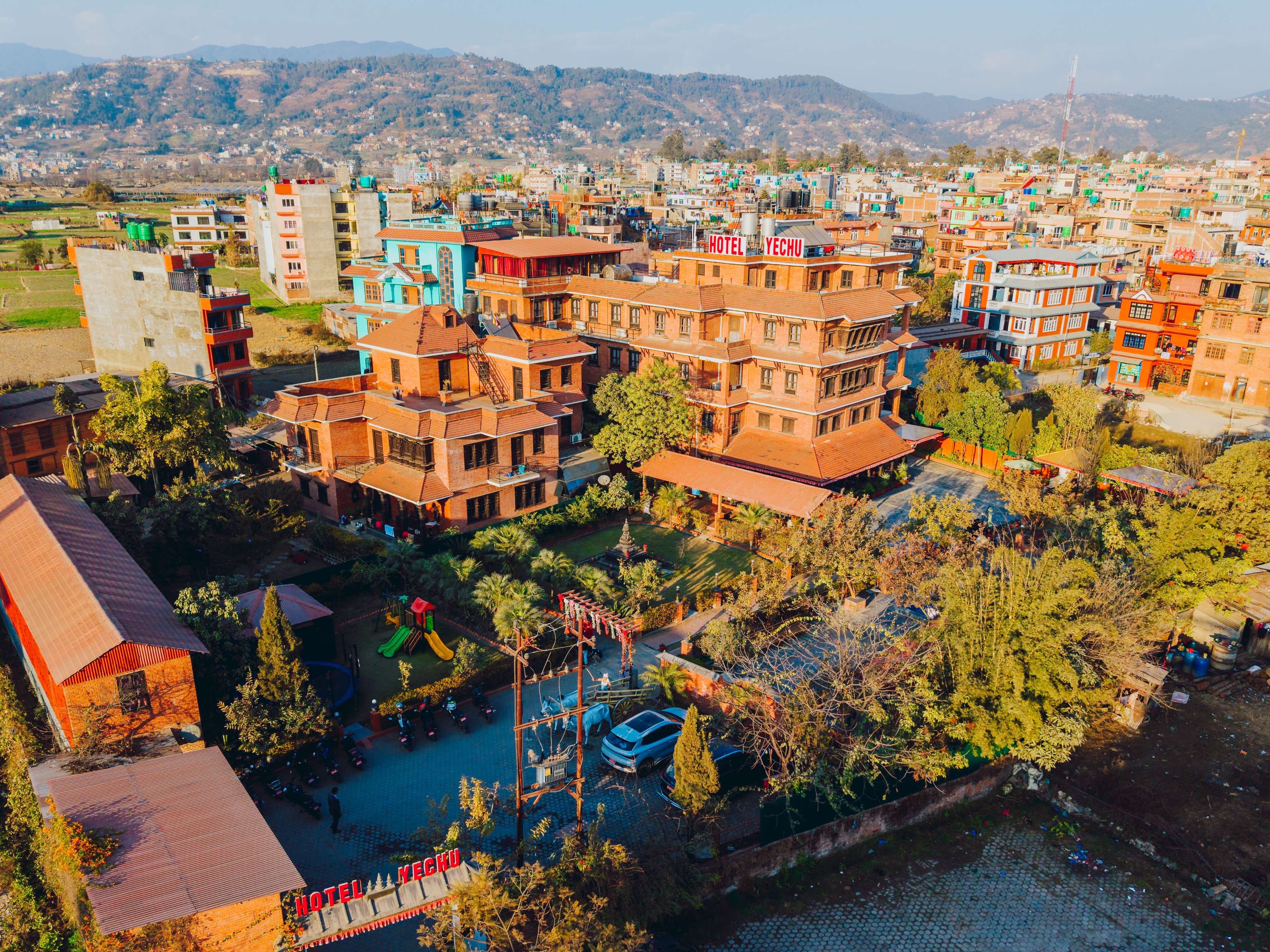
Hotel Yechu sits in Kamalbinayak on Bhaktapur's quiet eastern side, ten minutes' walk from the old town gates and first on the road to Nagarkot — with a swimming pool, gardens, family rooms, and free parking that old-town hotels can't offer. For the full picture of visiting the city, start with our complete Bhaktapur Travel Guide 2026.
How much is the Bhaktapur Durbar Square entry fee in 2026?
NPR 1,800 for foreign nationals, NPR 500 for SAARC and Chinese nationals, and free for Nepali citizens. The ticket covers the entire old city, not just Durbar Square.
Can I visit Bhaktapur Durbar Square for free?
Nepali citizens enter free. For others, the fee applies at staffed checkpoints during the day; the fee funds the city's restoration and upkeep, and paying it is both required and genuinely worthwhile.
How do I get the free multi-day pass?
Show your passport with your ticket at the main gate ticket office and request an extension — your ticket becomes valid for your visa duration at no extra cost.
What are the ticket counter opening hours?
Roughly 7:00 AM to 7:00 PM daily at the main gates. The city itself remains open around the clock.
Does the ticket include the museums?
The city ticket covers all outdoor squares and streets. The National Art Museum in the 55-Window Palace and a couple of smaller museums charge a small additional fee.
Is one day enough for Bhaktapur Durbar Square?
You can see the main squares in a day, but the free pass extension makes staying overnight the better-value option — and the city is at its best in early morning and evening.